There’s a particular kind of frustration every agency person knows. A project wraps up, the client pushes back on the invoice, and somewhere in the conversation, you end up saying, “But it’s in the SOW.” And they say, “Where? I didn’t see that.”
They signed it. They just didn’t read it—not the way you wrote it.
This isn’t a client competence problem; it’s a communication problem. Most statements of work are drafted by people who’ve been burned before. The language is defensive, the structure is dense, and the whole document is built to survive a legal dispute rather than to guide a working relationship.
The good news is you can have both. A scope document that holds up legally and one that clients genuinely understand aren’t mutually exclusive, but you do have to build them intentionally.
Legal Scope Or Functional Scope? You Need Both
Most agencies write one scope document and expect it to do two different jobs.
The first job is legal: protect the agency if a client disputes deliverables, billing, or timelines.
The second job is functional: help the client understand exactly what they’re getting, what they’re not getting, and what happens if they want something different.
These two jobs require different languages, different structures, and, ideally, different documents.
Your legal SOW should be thorough. It should define terms, enumerate exclusions, specify revision rounds, and outline the change order process in detail. That document is for your contracts folder and your attorney.
Your functional scope is what the client actually needs to read before kickoff. It answers the question: “If I’m the client and I skim this in five minutes, will I understand the key boundaries of this engagement?” Most SOWs fail that test completely.
Two Documents, One Signature
The simplest fix is to stop treating your master SOW as a client communication tool. Use it as the legal backbone, and build a plain-language companion alongside it—more on that below.
The Three Things Clients Miss Every Time
You could audit a hundred SOW disputes and trace most of them back to three categories of misunderstanding. Not malice—misunderstanding.
What’s Excluded?
Clients read deliverables lists as inclusive of everything they assumed was included. If your web project scope covers five pages and they imagined seven, they didn’t register the five-page limit—they just pictured their site. Exclusions buried in Section 6.3 don’t survive a skim.
Revision Limits
“Two rounds of revisions” sounds clear until the client interprets a round as “as many comments as I want in one email.” Most clients have no mental model of what a revision round means to an agency. They’ve never been told.
The Change Order Process
Clients don’t avoid change orders because they’re greedy.
They avoid them because no one explained what triggers one, how much notice is required, or how quickly one can be approved.
The process feels like a penalty. If it’s buried in legal language, they simply pretend it isn’t there.
Why This Happens
Every one of these issues stems from the same root cause: the SOW was written for protection, not comprehension. Fixing it means writing explicitly for the client who will skim it at 9 pm before a board meeting.
Plain-Language Techniques That Actually Work
Translating agency language into client-facing scope descriptions isn’t about dumbing things down. It’s about removing the assumption that the reader shares your operational vocabulary.
Start with deliverables.
Instead of “one (1) responsive homepage layout delivered in XD format, two (2) revision rounds inclusive”…
Try: “We’ll design your homepage. You’ll see one design direction. You can request changes twice before we move to development. Additional changes after that are billed separately.”
Same information. Completely different comprehension.
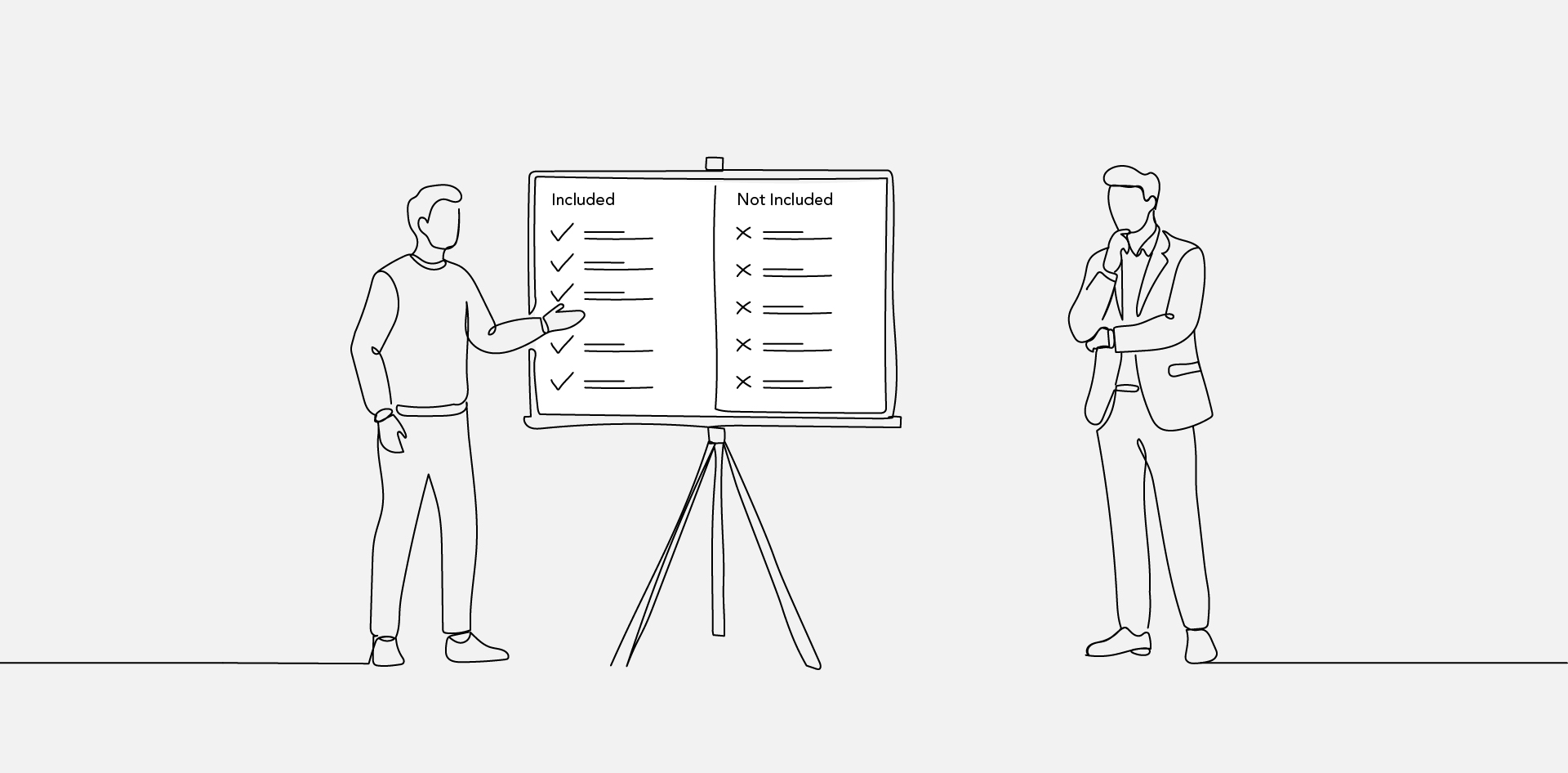
For exclusions, lead with them—don’t bury them. A short “What’s not included in this project” section near the top of your scope summary lands differently than exclusions embedded in the terms.
Clients don’t read what they don’t expect to find.
Make the Change Order Process Feel Normal
Describe the change order process the way you’d explain it to a new client on a call.
“If you’d like to add something outside this scope, we’ll send you a quick change order document—usually within 24 hours—that shows the cost and timeline impact. Once you approve it, we will add it to the project.”
That’s it. That’s the whole mystery.
When clients understand the mechanism, they use it correctly instead of assuming things are included or just adding to the brief mid-sprint.
Scope Summary: One-Pager That Changes Everything
The single most effective tool for reducing scope disputes is something most agencies don’t produce: a plain-language scope summary that the client signs alongside the formal SOW.
One page in plain English highlighting the five or six things the client needs to understand before the project starts.
It covers—what’s being built or delivered, what’s explicitly not included, how many revision rounds are included, what triggers a change order, and the approval process. That’s it.
According to PMI’s Pulse of the Profession research, scope creep affects a significant majority of projects and is consistently cited as one of the top contributors to project failure. A one-page summary doesn’t solve every scope problem—but it removes the plausible deniability that feeds most of them.
Getting the Client to Actually Sign It
Position the scope summary as a courtesy, not an extra hoop. “We put together a quick plain-English version of the main scope boundaries—just to make sure we’re on the same page before we kick off.
Takes two minutes to read.” Most clients appreciate it. The ones who push back on it are the ones who needed it most.
The Verbal Walkthrough Before You Start
Here’s the thing no legal revision to your SOW will ever replicate: a ten-minute phone call where you walk the client through what’s in scope, what’s not, and what happens if things change.
Not to hard-sell the document. Not to read it aloud. Just to pause on the three or four boundaries that have historically caused friction and say, “I want to make sure this makes sense before we start.”
Research published in the Journal of Business and Psychology consistently shows that verbal communication increases comprehension and recall significantly compared to written-only delivery.
When a client hears a boundary explained out loud and has a chance to ask a question, they encode it differently than when they skim past it on page four.
More practically: if a client has a misconception about what’s included, you want to surface it before kickoff—not after three weeks of work.
What to Cover in the Walkthrough
You don’t need to go line by line. Hit the three categories clients always miss: what’s excluded, how revisions work, and what triggers a change order.
Ask if they have questions. Let them talk. The conversation, not the document, is what sets the right expectations.
Building a Scope Culture Inside Your Agency
All of this only works if it’s consistent. A one-off scope summary on your biggest projects doesn’t build the habit. It needs to be a standard part of your kickoff process—expected, templated, and reviewed every time.
Start with a template. Draft your plain-language scope summary for a typical project type and adapt it for each engagement. The act of filling it in forces whoever is writing the scope to think through exclusions and revision limits concretely, not abstractly.
HubSpot’s State of Marketing research has repeatedly shown that client retention is directly tied to how well-managed the initial engagement experience feels.
Scope disputes aren’t just financial problems—they’re relationship-ending ones. Agencies that handle scope well get renewals. Agencies that don’t handle them well spend their time writing defensive emails instead.
Make It a Pre-Kickoff Requirement
The verbal walkthrough and scope summary sign-off should happen before any work starts—not at kickoff, not during the discovery call. Before.
It signals professionalism, reduces the chance of a bad start, and sets the tone for how you’ll manage the whole engagement.
Conclusion: Clear Scope, Stronger Relationships
A scope document that only protects you legally is half a document.
The half that’s missing is the one that actually prevents disputes—because it makes sure the client understands what they agreed to before the project ever started.
The mechanics aren’t complicated: a plain-language summary, a ten-minute walkthrough, and a consistent process for flagging what’s out of scope. None of it requires a new CRM or a legal review. It requires a deliberate decision to write for comprehension, not just coverage.
Agencies that do this well don’t just have fewer scope disputes, they also have better client relationships—because the client felt informed and respected from the start, not managed and corralled after the fact.
Frequently Asked Questions
FAQs
How Long Should a Scope Summary Be?
One page is the target. If it’s running longer, you’re either covering too many deliverables in one document or writing in agency language again.
The goal is five or six key points a client can read in under three minutes. If they need to scroll, trim it.
Should the Scope Summary Replace the Formal SOW?
No, it works alongside it. The formal SOW is your legal document; the scope summary is your communication tool. Both get signed.
The summary gives the client a reference point they’ll actually use during the project; the SOW protects you if the relationship deteriorates.
When Is the Right Time to Do the Verbal Scope Walkthrough?
After the proposal is accepted and before the project kicks off. At that stage, the client is committed but hasn’t yet formed assumptions about the work. It’s the ideal window to clarify boundaries.
Doing it at kickoff is better than not at all, but doing it earlier is better.
What if a Client Pushes Back on Revision Limits During the Walkthrough?
That’s a good sign, not a bad one. It means the walkthrough is working.
Use it as a negotiation moment: either adjust the scope and the price accordingly, or explain what the revision limit is designed to protect (your timeline and their budget).
Most clients respond well when the reasoning is explained plainly.
Can White-Label Partners Help Agencies With Scope and Delivery Management?
Yes, this is one of the practical advantages of working with white-label execution partners.
When an agency’s delivery layer is handled externally, the internal team can spend more time on client-facing scope clarity and relationship management, rather than juggling both strategy and execution simultaneously.