Where Talent Quietly Starts To Slip
Teams feel busy.
But disengaged.
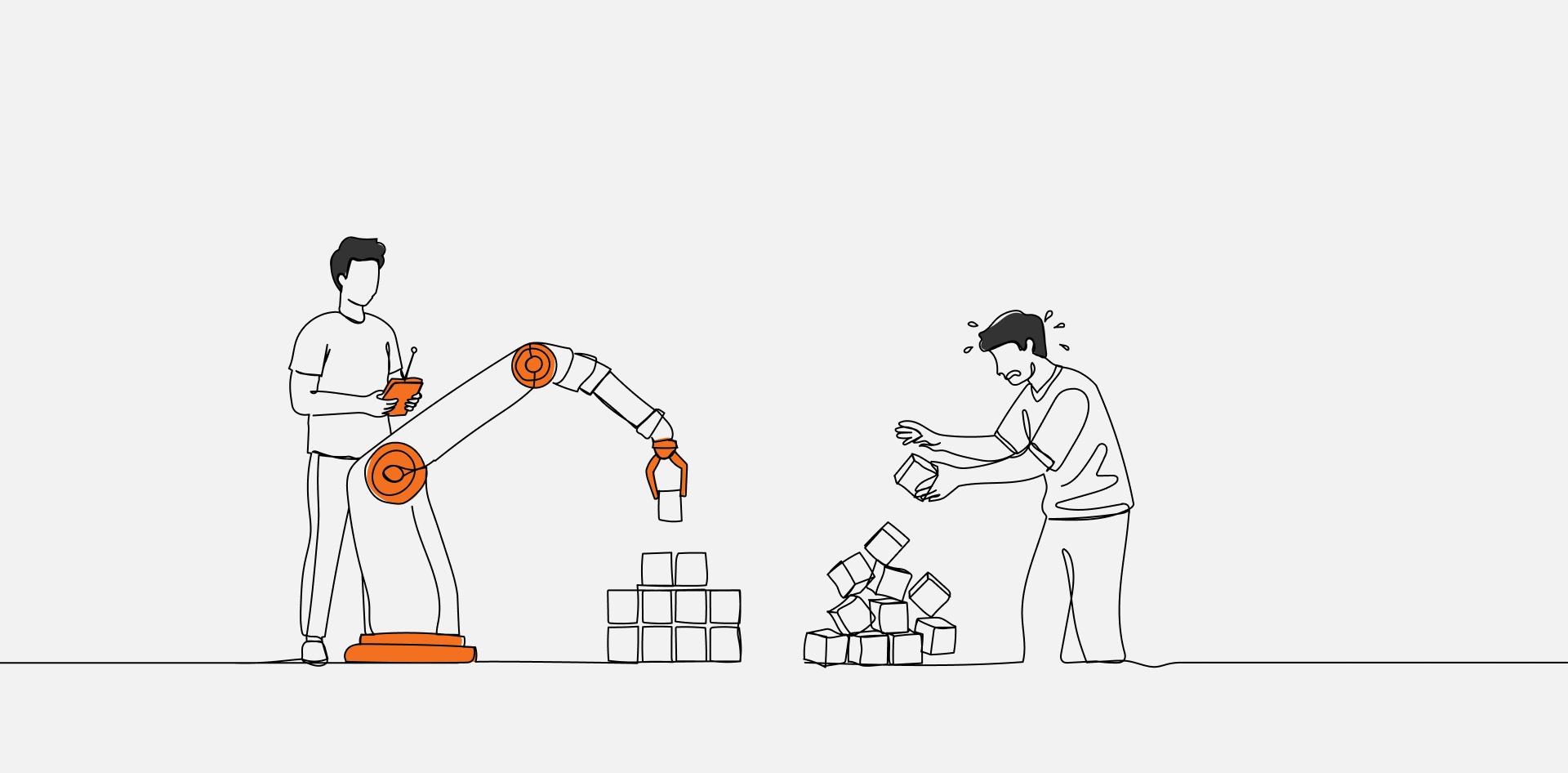
Senior people are working hard, yet the work feels heavier than it should. Not because there is too much of it, but because too much of it does not require their judgment. High-value roles slowly fill with low-value production, and the drain begins quietly.
This is not burnout.
It is cognitive misallocation.

When senior talent spends their days context switching, fixing edge cases, and pushing work through systems, premium thinking gets fragmented. Quality slips. Rework grows. And the role stops resembling why they joined the agency in the first place.
This blog reframes AI as a defensive layer, not a productivity hack. Used correctly, it absorbs low-value execution so premium human judgment stays protected.
That distinction changes everything.
Agencies Are Not Losing Talent They Are Misallocating It
Agencies rarely lose senior people because they stop caring.
They lose them because the work stops matching their judgment.
Most attrition narratives point to workload, pace, or pressure. But those explanations miss the real mechanism. Senior talent erosion starts when high-value roles are gradually repurposed to carry low-value work. Not all at once. Quietly. Incrementally.
Production tasks creep upward because someone has to keep things moving. Senior people are closest to the client, the strategy, and the consequences of mistakes, so they step in. They unblock. They rewrite. They QA. They context switch. Over time, their role becomes a buffer for system friction.
This is cognitive misallocation.
According to Agency Core Research 2025, only 25% of agencies are very satisfied with their strategic versus tactical work mix. At the same time, 47% of agency leaders report losing staff in the last year. These numbers coexist for a reason. When senior roles are dominated by tactical execution, retention pressure rises even if workloads appear manageable.
The problem is not effort.
It is allocation.
Research from the American Psychological Association on multitasking and task switching costs reinforces this pattern. Constant context switching degrades focus, increases error rates, and erodes the conditions required for deep, judgment-based work. For senior talent, whose value is rooted in synthesis and decision-making, this degradation is especially costly.
Agencies feel busy because work is moving.
Senior people feel drained because their judgment is being diluted.
Until that distinction is made, retention conversations stay stuck at the surface.
Why Senior Talent Feels Drained Even When Workloads Look Reasonable

This is where most leaders misdiagnose the issue.
- They look at hours.
- They look at utilization.
- They look at capacity.
And everything appears fine.
The failure is not visible in volume metrics. It lives in task quality. Senior talent is asked to operate across too many cognitive altitudes in the same day. Strategic thinking in one moment. Production clean-up in the next. Then back again.
Each switch carries a cost. Not just time, but recovery. Re-entering strategic thinking after handling execution noise requires mental rebuilding. When that rebuilding happens repeatedly, depth disappears. The work still gets done, but it gets thinner.
The American Psychological Association research on multitasking and context switching makes this explicit. Task switching increases mental load and reduces effectiveness, particularly in complex work. For senior roles, whose value depends on sustained attention and synthesis, this creates invisible fatigue long before burnout shows up.
This is why senior people disengage quietly.
They are not overwhelmed.
They are underutilized in the wrong places.
As production gravity increases, premium work becomes fragmented across interruptions, handoffs, and clean-up tasks. The agency still moves. Clients still get deliverables. But the role no longer feels like leadership or strategy. It feels like noise management.
That mismatch is unsustainable.
Not because people cannot handle pressure.
But because judgment cannot thrive inside constant disruption.
Talent Drain Is Caused by Cognitive Misallocation Not Burnout
Myth:
Burnout happens because agencies ask too much of their people.
Reality:
Burnout emerges when agencies ask the wrong things of the right people.
When high-judgment roles are flooded with low-value execution, the role itself deteriorates. The work loses meaning. The leverage disappears. And the person starts questioning why they are there.
- This is not a resilience problem.
- It is a design problem.
Agencies often respond by offering time off, flexible schedules, or lighter loads. Those interventions can help temporarily, but they do not address the structural cause. As long as production gravity pulls senior talent downward, the erosion continues.
The signal is subtle.
Quality dips.
Decision-making slows.
Rework increases.
Eventually, the agency labels it burnout. But by then, the system has already failed.
Retention improves when leaders stop treating disengagement as an emotional issue and start treating it as an operational one. The moment you recognize that premium judgment is being misallocated, the solution becomes structural, not motivational.
And that shift opens the door to a very different role for AI.
The Work That Should Never Be Automated
Not all work is equal.
And not all work should ever be touched by AI.
The fastest way to erode senior roles is to automate indiscriminately. When agencies apply AI to high-judgment work, they do not gain efficiency. They lose differentiation.
The line is not technical.
It is cognitive.
Use the checklist below as a diagnostic, not a rulebook. If a task consistently meets these conditions, it should remain human-owned.
Should This Work Ever Be Automated?
Answer four questions about the task. If most answers are “yes,” this work must stay human-owned.
Does this task require making tradeoffs with incomplete information?
Would a mistake here damage client trust or credibility—not just output quality?
Does this task rely on context that lives across people, conversations, or history?
Is someone ultimately accountable for the judgment behind the decision—not just the execution?
RESULT LABEL
Protected Work
This task depends on human judgment. Automating it increases risk and erodes role value.
Research from Stanford WORKBank task-level auditing and worker preference studies supports this distinction. Workers consistently prefer AI to handle low-value, repetitive tasks, not high-judgment work that defines their role and expertise.
Clients reinforce this boundary as well. Agency Edge Client Research 2023 shows that agencies are valued for strategy, creativity, and communication, while quality failures remain a top reason agencies are fired. Automating judgment-heavy work does not protect margin. It introduces risk.
AI belongs where judgment does not.
Everything else must be defended.
AI Is a Focus Firewall Not a Productivity Hack

Most agencies adopt AI with the wrong goal.
They look for speed.
They look for efficiency.
They look for output gains.
Those outcomes are secondary.
When AI is framed as a productivity tool, it gets applied everywhere. That is how premium work gets exposed instead of protected. When AI is framed as a focus firewall, its role becomes clearer. It absorbs low-value execution before it reaches senior talent.
That framing aligns with findings from MIT Sloan Management Review research on generative AI and highly skilled workers, which shows that AI can significantly boost the productivity of experts when it augments their work instead of replacing their judgment.
This is the difference that matters.
AI should reduce context switching.
It should eliminate task fragmentation.
It should remove execution noise from senior roles.
When governed correctly, AI does not speed people up.
It keeps them in the work only humans should be doing.
That is how it becomes a retention lever instead of a cultural risk.
The Premium Work Protection Model
This section intentionally introduces the Premium Work Protection Model without embedding the framework itself.
The purpose of this model is singular:
to structurally defend high-judgment work from production gravity.
What Happens to Premium Work Without Protection
Premium work erodes by default.
Protection is the only thing that stops it.
High-Judgment Work
Strategy, decisions, creative synthesis
Production Pressure
Requests, fixes, handoffs, context switching
Role Dilution
Judgment gets fragmented
Outcome
Erosion of focus, quality, and engagement
High-Judgment Work
Strategy, decisions, creative synthesis
Protection Layer
Boundaries that prevent execution creep
Execution Absorption
Delivery work is intercepted elsewhere
Outcome
Focused judgment, stable quality, retained talent
The Execution Absorption Layer
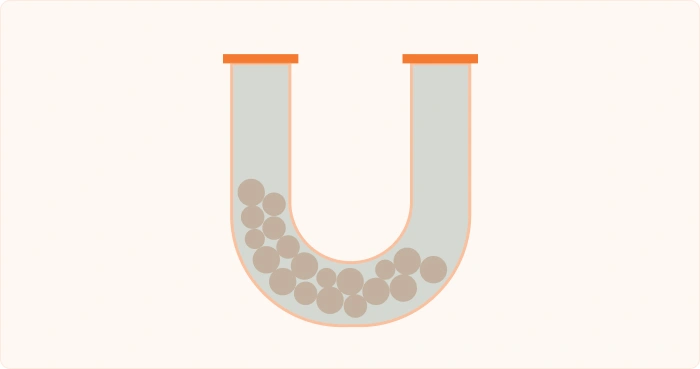
Even when leaders understand the need to protect premium work, most agencies still struggle with one question.
Where does the execution go?
Ignoring it is not an option. Execution does not disappear. It accumulates. And when it has nowhere else to land, it lands on senior talent.
The Execution Absorption Layer exists to intercept production work before it reaches high-judgment roles. It is not a single tool or tactic. It is an operating layer designed to carry delivery noise so senior people do not have to.
Where Execution Actually Goes
Execution always flows somewhere.
The question is where it lands.
Client & Delivery Requests
Changes, fixes, handoffs, coordination
Execution Overflow
Work has nowhere else to go
Senior Roles Absorb It
Leaders step in to unblock and clean up
Outcome
Fragmented focus, diluted judgment, disengagement
Client & Delivery Requests
Changes, fixes, handoffs, coordination
Execution Absorption Layer
Delivery noise is intercepted
Senior Roles Stay Protected
Judgment remains upstream
Outcome
Quiet systems, stable quality, sustained focus
This is where AI and external execution capacity work together, not as replacements, but as buffers.
For many agencies, this absorption does not require internal hiring. It requires removing production drag without expanding payroll, which is why this concept aligns naturally with models like Hire Dedicated Resources.
The value is not cheaper work.
It is quieter systems.
And quiet systems are what protect senior judgment.
Retention Becomes Solvable When You Design for Focus
Retention feels unsolvable when it is framed as a people problem. It becomes manageable the moment it is treated as a systems problem.
Agency leaders already feel this tension. According to Agency Core Research 2025, retention pressure remains high even as hiring difficulty eases. That tells a clear story. The issue is not access to talent. It is how talent is used once it arrives.
At the same time, Agency Edge Client Research 2023 reinforces that agencies win and keep clients through strategy, creativity, and communication. Those outcomes depend on protected thinking time. When senior roles are consumed by execution cleanup, those capabilities degrade.
Designing for focus changes the equation.
Execution is absorbed.
Judgment stays upstream.
Roles remain aligned with value.
AI becomes a defensive layer.
External execution becomes a buffer.
Retention stops being reactive.
This is not cultural work.
It is structural work.
And it is one of the few retention levers agencies can actually control.
Retention Becomes Predictable
Senior talent does not leave agencies because the work is hard.
They leave when the work no longer matches their judgment.
When premium roles are flooded with low-value execution, erosion is inevitable. Quality slips. Focus fragments. And disengagement shows up long before resignation letters do. Calling that burnout misses the point.
AI changes the equation only when it is governed correctly. Not as a shortcut. Not as a replacement. But as a defensive layer that absorbs execution noise and protects the work only humans should be doing.
When premium work is actively defended, senior talent stays engaged. Strategy deepens. Quality stabilizes. Retention becomes predictable.
That is the leverage most agencies are missing.
What Agency Leaders Ask Once They See The System
FAQs
What Is Cognitive Misallocation In Agencies
Cognitive misallocation happens when high-judgment roles are routinely pulled into low-value production work. Over time, this fragments focus, erodes role clarity, and disengages senior talent even when workloads appear reasonable.
Why Does Senior Talent Leave Even When Burnout Is Not Obvious
Because disengagement often precedes burnout. When roles stop protecting judgment and thinking time, senior people quietly detach before they ever feel overwhelmed.
Is AI Meant To Replace Senior Roles
No. AI is most effective when it functions as a focus-protection layer. Its role is to absorb low-value execution so senior talent can stay in strategic, judgment-driven work.
How Do Agencies Decide What Work Should Never Be Automated
Work that requires strategic judgment, creative synthesis, nuanced client communication, or accountability for risk should remain human-owned. Automation without governance increases erosion instead of efficiency.
Why Does Retention Improve When Execution Is Absorbed Elsewhere
Because senior roles remain aligned with value. When execution noise is intercepted before it reaches leadership and strategy roles, focus stabilizes and engagement returns.
Is This A Culture Or Morale Issue
No. Culture reflects systems. When systems misallocate work, morale declines. Fixing role design and execution flow addresses the root cause directly.