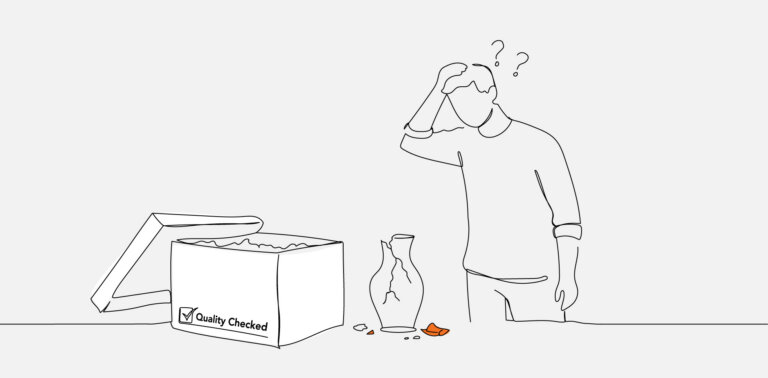
A client calls you excited. Their organic rankings look strong, traffic is stable, and the last audit came back clean. Everyone’s happy… And then someone on their team asks a simple question:
“What does ChatGPT say when someone asks about the best product/service in our space?”
Dead air.
They try their best, but their brand doesn’t appear in AI responses. Not once. But a competitor they’ve never worried about is cited three times in the same response.
The rankings they’ve worked so hard for are completely invisible to the AI answering the question their customers are actually asking.
This isn’t an SEO failure. It’s a different problem entirely—and it requires a different kind of audit.
Why AI Search Operates on Different Rules
Traditional search engines rank pages; AI search engines generate answers.
That distinction sounds subtle, but it fundamentally changes how visibility works. When Google ranks a page, it rewards signals like domain authority, keyword relevance, and backlink profiles.
When an AI model generates an answer, it draws on its training data, real-time retrieval, and how clearly a source establishes authority on a topic.
A brand can rank on page one for a competitive keyword and still be entirely absent from the AI-generated answer covering the same topic. The two systems reward different things. A site built to win in one doesn’t automatically win in the other.
- The Citation Gap No One Is Measuring
When a user asks an AI assistant for a vendor recommendation, a how-to guide, or an industry comparison, the model typically surfaces two to four sources.
For most brands, no one is tracking whether they’re appearing in those answers—or who is appearing instead.
This is the citation gap. It’s invisible in a standard SEO report, but it’s growing as AI search adoption increases across industries.
How AI Models Decide What to Surface
Understanding what drives AI visibility starts with understanding how these models work at a retrieval level.
Large language models and AI search tools like Perplexity, ChatGPT Search, and Google’s AI Overviews don’t just match keywords. They look for content that clearly and directly answers questions, establishes topical authority, and is structured in a way that’s easy to parse and cite.
- What AI Models Tend to Favour
Several patterns consistently increase a brand’s chance of being cited in AI-generated responses:- Clear, direct answers to specific questions: Content that answers a question in the first sentence, not the fifth paragraph
- Structured content: Headers, bullet points, defined terms, and a logical hierarchy that make information easy to extract
- Topical depth and consistency: Brands that own a topic across multiple pieces of content, not just one well-optimised page
- Credibility signals: Third-party mentions, structured data, authoritative outbound links, and consistent entity information across the web
A site can be technically sound and still score poorly on all four of these dimensions. SEO and AI visibility are complementary but not interchangeable disciplines.
Compounding Risk of Being Invisible to AI
Missing from AI answers isn’t just a missed impression but a compounding visibility problem.
According to BrightEdge, AI Overviews now reach over one billion users globally, with some industries like healthcare and education seeing AI-generated answers in over 80% of relevant queries.
As more users start their research through AI assistants rather than search bars, the first touchpoint of the buyer journey is increasingly an AI-generated summary—not a list of blue links.
If a brand isn’t cited in that summary, it doesn’t exist in that moment of consideration.
- What Gets Displaced
The brands that do appear in AI answers tend to get disproportionate attention. Users treat AI citations as trusted recommendations, not just results to browse.
Being cited once in a well-framed AI answer can carry more weight than appearing on page two of Google ten times.
That changes the stakes of visibility significantly. It’s not about volume of appearances; it’s about whether you appear at all when the question most relevant to your client’s business gets asked.
Why Traditional SEO Audits Don’t Catch This
A standard SEO audit is built for a standard SEO world. It checks rankings, crawlability, technical health, backlink profiles, and on-page optimisation. These are all still important.
But none of those signals directly measure AI visibility. An audit can give a clean bill of health on every traditional metric while the brand remains completely absent from AI-generated answers in its category.
- The Metrics That Actually Matter for AI Visibility
An AI visibility audit looks at a different set of signals:- Answer inclusion rate: How often does the brand appear when relevant questions are asked across AI tools?
- Citation source audit: Which pages are being cited, and why? Which competitors are being favoured?
- Content structure analysis: Is the site’s content formatted in a way AI tools can extract and cite cleanly?
- Entity and knowledge graph presence: Is the brand recognised as a distinct entity across structured data sources?
- Question-answer alignment: Does the content directly address the questions buyers are actually asking AI tools?
These signals require a different methodology—and a different conversation with clients.
What an AI Visibility Audit Actually Involves
An AI visibility audit maps the gap between where a brand currently sits in AI-generated answers and where it should be, then identifies exactly what needs to change.
The process typically involves querying AI tools—ChatGPT, Perplexity, Google AI Overviews, and others—across a defined set of intent-based questions relevant to the client’s category.
The audit tracks who appears, how often, what content is being cited, and what signals those sources carry that the client’s site currently doesn’t.
- From Findings to Action
The output isn’t just a list of gaps. A well-structured AI visibility audit delivers:- A clear picture of the current AI presence across relevant query categories
- A competitor citation analysis showing who is appearing and why
- Specific content and structural recommendations to improve citation rate
- Entity optimisation guidance to improve how AI tools recognise and reference the brand
- A prioritised roadmap so agencies can act on findings without overwhelming the client
This kind of audit gives agencies a new, highly differentiated service to offer—one that most clients don’t know they need until they see the data.
The Agencies That Move First Will Own This
The shift to AI search isn’t replacing traditional SEO. Both channels matter, and both require deliberate strategy. But they are genuinely different distribution channels—and conflating them means leaving visibility gaps that no amount of ranking improvement will close.
Most clients don’t know this problem exists yet. The brands winning in AI search are the ones that understand the rules of this channel, build content to match them, and audit their presence regularly enough to adapt as the models evolve.
For agencies, that represents a real opportunity: to show up before the client realises the gap, bring data that reframes the conversation, and offer a solution that most competitors haven’t built a practice around yet.
Frequently Asked Questions
FAQs
Does Good SEO Performance Automatically Improve AI Visibility?
Not necessarily. While strong domain authority and quality content create a foundation, AI models weigh different signals than traditional search engines. A site can rank well organically while being consistently absent from AI-generated answers, especially if its content isn’t structured to be easily parsed and cited.
Which AI Tools Should Be Included in an AI Visibility Audit?
The most relevant tools to track are ChatGPT (with browse/search enabled), Perplexity AI, Google AI Overviews, and Microsoft Copilot. The priority mix depends on the client’s industry and where their target audience is most likely to be doing research.
How Often Does AI Visibility Need to Be Audited?
More frequently than a standard SEO audit. AI models are updated regularly, retrieval behaviour shifts, and competitors adapt. Quarterly audits are a reasonable starting point for most clients, with monthly monitoring for brands in competitive or fast-moving categories.
Can a Small Brand Compete With Large Brands in AI Search?
Yes—arguably more easily than in traditional search. AI tools don’t exclusively favour brand size. A smaller brand with highly specific, well-structured, question-aligned content can consistently appear in AI answers over larger brands with broader but shallower content libraries.
How Does White Label IQ’s AI Visibility Audit Help Agencies Deliver This?
White Label IQ’s AI Visibility Audit is built for agencies to deliver under their own brand. It covers AI citation analysis, content structure review, entity optimisation, and a prioritised recommendations roadmap—giving agencies everything they need to have a credible, data-backed AI visibility conversation with clients without building the capability from scratch.