Every agency owner has watched a perfectly accurate audit land badly in a client meeting. The findings were thorough, and the framing seemed clear, but the client still walked away convinced that something had gone catastrophically wrong.
That gap between what the technical findings said and what the client heard is one of the most costly failures in agency work, and it rarely gets traced back to the writing itself.
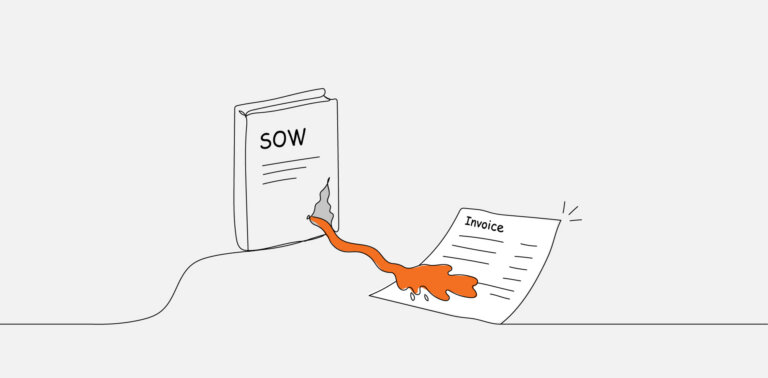
It usually plays out something like this: the audit found eight critical issues, the client heard “the site is broken,” and called their CEO before anyone could explain that “critical” in technical taxonomy doesn’t mean the website is on fire.
Technical findings don’t speak for themselves. The moment one leaves the engineer’s screen and lands in a client meeting, it stops being information and starts being a story, and the client builds that story from whatever fragments they happen to understand.
This piece walks through the translation frameworks that turn technical findings into client decisions: how to lead with outcomes, frame severity without panic, prioritize in language clients use naturally, and connect every finding to a clear recommendation.
Lead Technical Findings With Outcomes, Not Mechanisms
The translation principle is straightforward to state and surprisingly hard to do consistently: lead with what something means before you explain how it works.
Most technical findings emerge from the team’s mechanism-first approach. They describe the broken thing in its own language—the misconfigured cache, the unindexed page, the layout shift score—because that’s how engineers think and how findings get logged internally.
None of it transfers cleanly to a client who has never opened a developer console.
Clients don’t carry a mental model for cache invalidation, but they all carry one for “customers can’t see the new pricing.” The finding is identical, but the framing decides whether the client treats it as a budget conversation or files it under engineering noise.
PMI’s 2013 communications research found that about four in five projects communicated clearly and in the audience’s own language met their original goals, compared with just over half of projects where communication fell short.
The audit doesn’t move the business until the client understands it well enough to act, and that understanding starts with outcomes rather than mechanisms.
The Two-Sentence Rule
The fastest way to retrain the impulse is the two-sentence rule. The first sentence states the business impact in the language the client uses day to day. The second explains the mechanism in the language the technical team uses internally.
Instead of “Your cumulative layout shift score on mobile is 0.31, well above the 0.1 threshold,” try “Your mobile pages shift around while loading, which is causing visitors to misclick and bounce before they reach checkout.
The technical metric behind that is cumulative layout shift, and you’re scoring roughly three times Google’s ‘good’ threshold of 0.1.” That second sentence is exactly the kind of detail a Core Web Vitals audit is built to surface, and it belongs in the explanation rather than the headline.
The client now has a choice: act on the first sentence alone, or read the second for context. The rule also forces the audit team to think about every finding twice—if you can’t write the first sentence, you probably don’t yet know why the finding matters, and it isn’t ready for a client deck.
How To Frame Severity Without Sparking Panic
“Critical” is a loaded word, and it gets thrown around far more often than the situation usually warrants.
P1/P2/P3 ratings, CVSS (Common Vulnerability Scoring System) scores, and severity tiers are calibration tools for engineers who already understand the range, and when dropped onto a client without translation, they default to the worst possible interpretation.
A website security audit shows that gap plainly: the same vulnerability can read as routine housekeeping to the team and as an emergency to the client.
The fix is to replace technical severity with business severity. Three tiers usually cover it: things actively costing the client money or trust, things that pose a realistic future risk, and things that are simply better practice to address.
Each tier needs a plain-English label and a paired recommendation, so the client never sees a severity without seeing what to do about it.
Anchor Severity To Money Or Time
Whenever possible, translate severity into one of two units clients track instinctively: revenue impact or hours of work to fix.
“This is costing you roughly $4,000 a month in lost mobile conversions” lands harder than “this is a high-severity issue,” and both are accurate, but only one prompts a decision.
When the financial impact isn’t known, time-to-fix becomes a useful proxy. A “two-hour fix” with significant upside reads very differently from a “two-week rebuild” with the same upside, and clients can hold both numbers in their head without needing a glossary.
The aim isn’t to soften findings or hide bad news, but to make sure the client’s emotional response matches the actual stakes instead of overshooting because the vocabulary felt unfamiliar.
Prioritization Language Clients Actually Understand
Once severity is framed, the next question is what to do first, and this is where most decks start to lose the room, because prioritization gets presented in engineering vocabulary that the client has to decode.
Lists titled “P1, P2, P3” or “Severity 1, 2, 3” are internal artifacts. They tell the development team what to pick up next sprint, but they tell the client almost nothing about timing, ownership, or trade-offs, which puts the burden of interpretation on the wrong side of the table.
A better approach is to use action verbs that imply timing on their face. “Fix this week” carries more information than “P1” because it tells the client when, suggests urgency, and assumes a decision is coming.
“Plan this quarter” signals that something matters but isn’t on fire. “Park until the next refresh” gives permission to ignore it without guilt.
Build A Three-Bucket Action Plan
The cleanest deliverable on this front is a three-bucket action plan that lives on one slide.
Bucket one is what gets done now, this week, or next sprint, because the cost of delay is real and the fix already sits inside the agreed project scope.
Bucket two is what gets planned for the current quarter, with a rough owner and a placeholder for budget approval. Bucket three is what gets parked until the next major refresh, scrapped outright, or revisited when conditions change.
Three buckets force discipline. Every finding has to earn its place in one of them, which prevents the audit from sprawling into a sixty-line spreadsheet nobody acts on. If the client pushes back on the prioritization, that isn’t a failure—it’s the audit doing exactly what it should, surfacing trade-offs and inviting a real conversation.
Visual Formats That Make Technical Data Land
Most technical audits are delivered as spreadsheets and long PDFs.
Spreadsheets work for engineers because engineers read them top to bottom, but clients rarely do, which means a spreadsheet handed to a client gets skimmed once and never reopened.
Three visual formats actually land in client meetings:
- Traffic-light dashboards that score the site or system by area—performance, SEO, security, accessibility—using red, amber, and green with one sentence of context per cell. A client can absorb the whole picture in ten seconds.
- Before-and-after screenshots that show the user-facing impact of a finding rather than the technical detail. A slow checkout page next to a fast one explains performance better than any metric.
- Single-metric trend lines that track one number the client already cares about—page speed, conversion rate, error count—over time.
Show The Thing, Don’t Describe The Thing
The cardinal rule of visual translation is to show, not describe. Clients believe what they can see and distrust what they have to take on faith, so a screenshot of a 404 page on a high-traffic URL is undeniable in a way that an explanation of HTTP status codes never quite manages to be.
The same logic applies to the report itself. A one-page visual summary, even a simple one, will outperform a forty-page PDF because the client will actually open it, which is the same principle that separates useful client reporting from a monthly data dump.
Harvard Business School Online’s guide for engineering leaders recommends data storytelling—pairing narratives with visualizations to inspire action—when sharing technical concepts with teams and clients.
If a finding can’t be visualized in a way a non-technical reader understands in under thirty seconds, it probably isn’t ready to leave the team.
Tie Each Finding To A Clear Recommendation
Every finding should end with a decision the client can make, and that last step is where most audits quietly fail.
A team can surface twenty issues, frame them well, prioritize them clearly, and then leave the recommendation to the client, which puts the cognitive load right back on the person with the least context. The audit was supposed to make the client smarter and faster, not hand them a longer to-do list.
A decision-ready finding has four parts:
- What was found
- What it means for the business
- What the team recommends
- What they need from the client to move forward
The fourth part is the one most reports skip, and without it, even good findings sit in folders.
Avoid the temptation to offer five options for every issue. Pick one recommended path, and mention alternatives only when the trade-offs are genuinely close, rather than outsourcing the decision back to someone with less context than you.
The Decision-Ready Finding
A useful test for any finding: it’s decision-ready when the client can act on it in one meeting, without needing a follow-up call to clarify anything.
That usually means a one-line recommendation, a one-line request (“approve the spend,” “grant access to the analytics account,” “confirm this is in scope”), and a clear next step if approval comes through. Website proposals that get approved work the same way, giving the client a defined decision instead of an open-ended menu.
If the team needs another internal call to figure out the recommendation, make that call before the finding goes to the client.
The strongest audit decks read like a short series of micro-decisions, where each finding ends with a recommendation, the client says yes or asks a question, and the conversation moves on. That’s what gets the audit acted on—not the depth of the analysis, but the clarity of the ask.
The Real Job Is Translation, Not Reporting
The technical work is usually the easy part of an audit. Finding the issues, scoring them, and documenting them is the discipline most teams already have.
The harder, less-visible work is making sure technical findings move from the audit document into a client decision, then into a budget line, and eventually into finished work that justifies the engagement.
Reports that don’t translate tend to sit in folders, while the ones that do become the spine of the next conversation, the next contract, and the next round of trust.
The translation step is what turns expertise into outcomes that the client can still point to a quarter later. Agencies without an in-house technical bench often close that gap with white-label website audits, which arrive already scored, prioritized, and written for a client audience.
The difference between an audit that earns a polite head-nod and one that earns a six-figure remediation budget is almost never the technical depth. It comes down to whether the client could read the first page, understand what was at stake, and know what to do next without needing a translator in the room.
Building that habit into every report is unglamorous work, but it compounds—every well-framed finding makes the next one easier to deliver and easier for the client to act on.
Frequently Asked Questions
FAQs
How Do I Present a Finding With Unclear Business Impact?
Say so directly. State the technical finding, note that the business impact is still unconfirmed, and propose a short discovery step to quantify it.
Clients respect honest uncertainty far more than confident guesses. “We’ve found this; we don’t yet know what it’s costing you; here’s what we’d need to find out” is a clean ask, and it often opens the door to a smaller-scoped engagement.
Should I Include Raw Technical Detail in Client Decks?
Strip it from the main narrative, but keep it accessible. The headline summary belongs in business language, while the detailed technical evidence belongs in an appendix or linked document where the client’s developer or IT lead can review it.
Most clients won’t open the appendix, but the technical contacts on their side will, and they’ll appreciate that the detail exists rather than feeling talked down to.
How Often Should I Follow Up After Presenting Findings?
A written recap within forty-eight hours is the minimum, covering decisions made, decisions still pending, and the next concrete action.
After that, cadence depends on the bucket: weekly check-ins for items being fixed now, monthly touchpoints for items planned this quarter, and quarterly reviews for parked items.
Prioritization is a living conversation, not a one-time deliverable.
What Do I Do When a Client Wants Everything Fixed?
Acknowledge the instinct, then walk them back to capacity and trade-offs. Doing everything at once almost always means doing nothing well.
Show them what the next six weeks look like if the team focuses on the fix-now bucket versus the full list, including realistic timelines and what gets delayed. Clients usually pick the focused plan once they see both options side by side.
Should Our Agency Build Translation Skills or Partner?
Both paths work, and the right answer usually depends on volume and bandwidth.
Smaller agencies often find it more efficient to lean on a white-label specialist for the technical execution and audit framing, while keeping the client relationship and strategic conversation in-house.
That model lets the agency deliver specialist-level findings without staffing a full technical team, and it tends to keep the translation discipline consistent across clients.