According to Forrester’s State of Business Buying, 2024 report, 86% of B2B purchases stall during the buying process because the buying group couldn’t reach internal alignment on what they were looking at.
Now think about how most agencies write website proposals—twelve pages of methodology, a capabilities section nobody asked for, and a pricing table buried on page nine behind three paragraphs about “our approach to discovery.”
The average B2B purchase now involves 13 stakeholders. Your proposal isn’t being read by one person over coffee. It’s being skimmed by a CFO between meetings, forwarded to an IT lead who wasn’t on the call, and summarized in a Slack thread by someone who opened it for 90 seconds.
If it doesn’t enable that chain of decisions on its own, it doesn’t matter how good the strategy inside it is; you have failed to successfully communicate it.
Most agencies write their proposals for the company when they should have been written for the person who has to take them to their board. That’s the gap this piece is about—and closing it is simpler than most agencies think.
The Real Reason Proposals Die In Committee
When a proposal stalls, it’s tempting to blame budget concerns or bad timing. But the real culprit is almost always structural. The document didn’t do the work of aligning a group of people who each came to the table with different priorities, different vocabularies, and different definitions of success.
A Gartner survey of 632 B2B buyers found that 74% of buying teams experience unhealthy conflict during the decision process—disagreements rooted in conflicting objectives or being overruled by stakeholders who entered the conversation late.
The same study found that groups that do reach consensus are 2.5 times more likely to report a high-quality deal.
That finding reframes the entire purpose of a proposal. Your job isn’t just to pitch the work. It’s to hand your contact a document that builds consensus for them—across finance, marketing, IT, and whoever else has a seat at that table.
- Your Contact Is An Advocate, Not A Buyer
Most agencies treat their primary contact as the decision-maker. In reality, that person is an internal champion.
They believe in the project—but they still have to sell it up, across, and sometimes sideways through their own organization.
If your proposal requires a 20-minute walkthrough to make sense, it won’t survive the hallway conversation where real budget decisions get made.
- What Stalling Actually Sounds Like
It’s rarely a clean “no.” It’s “we need to run this by a few more people.” It’s “could you send something shorter for our director?” It’s silence after a promising call.
None of those responses mean your work was bad. They mean your document didn’t carry the argument on its own. And the fix for that isn’t a better follow-up email—it’s a better proposal.
What Clients Actually Evaluate When They Open Your Proposal
There’s a gap between what agencies think clients care about in a proposal and what actually drives approval. Agencies tend to lead with their process, their team credentials, and the sophistication of their technical approach.
Clients, meanwhile, are scanning for three things: clarity of outcome, confidence in the process, and ease of comparison.
- Clarity Of Outcome
The very first question any stakeholder asks—whether they’re in marketing, operations, or finance—is “what do we get at the end of this?” Not what CMS you’re recommending. Not how many sprints are in the build phase.
If it takes more than 60 seconds to find a plain-language answer to that question in your proposal, you’ve already introduced friction into the approval process.
- Confidence In The Process
Non-technical stakeholders don’t need to understand every phase of the build. What they need is evidence that someone competent has thought this through.
A timeline with clearly defined milestones, stated decision points, and realistic durations gives more reassurance than a granular Gantt chart packed with tasks no one outside your team can interpret.
- Ease Of Comparison
Even when you’re the only agency in the running, your proposal is still being compared against the cost of doing nothing, against redirecting that budget elsewhere, against hiring someone internal.
Your document needs to make the value of moving forward feel obvious relative to every alternative, including inaction.
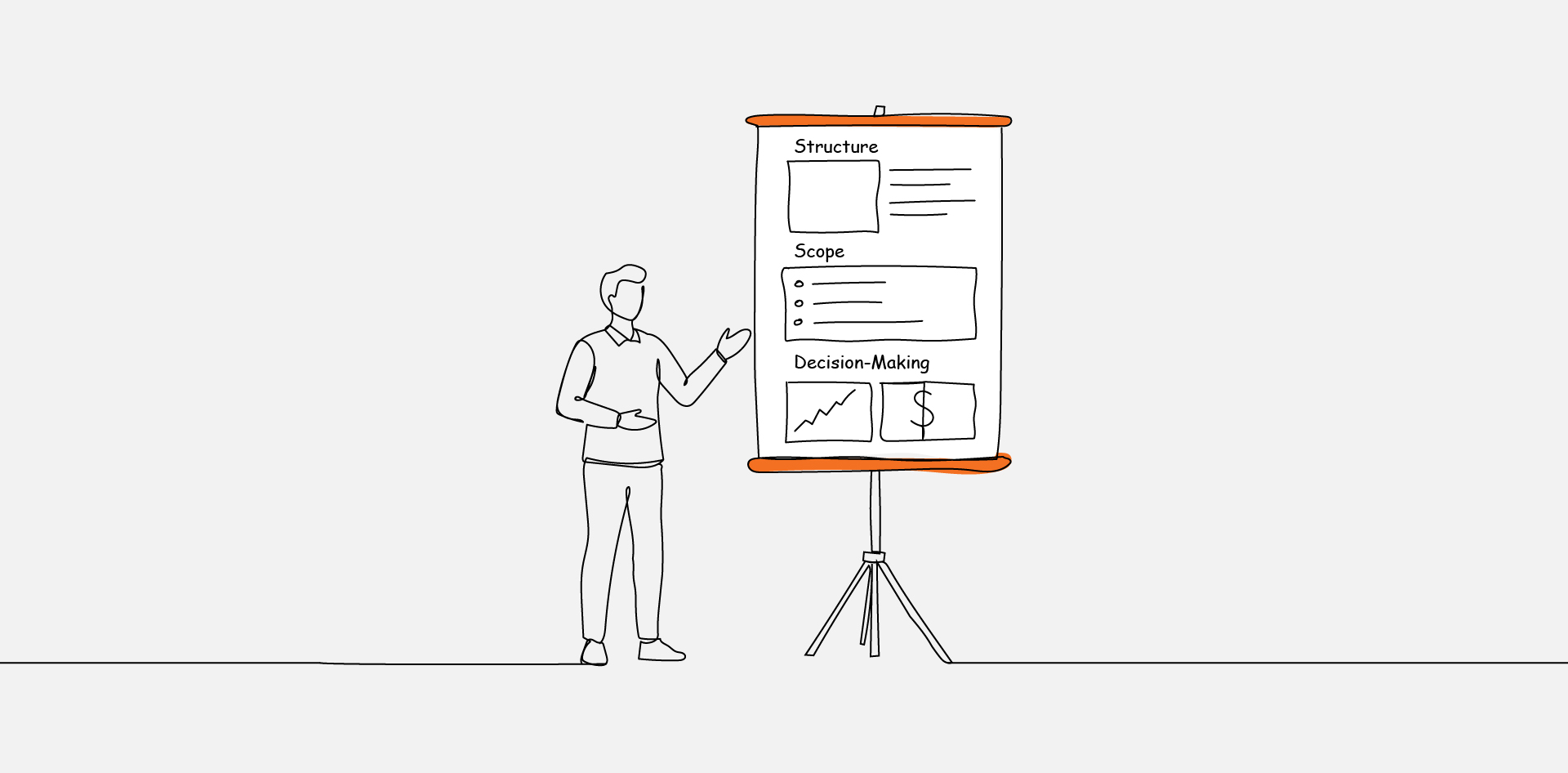
How To Structure Scope Without Overwhelming Non-Technical Readers
Scope is where most proposals lose the room. It’s the section agencies spend the most time writing, because it’s the part they know best. But it’s also the section most likely to alienate anyone outside the project team.
The fix isn’t to strip out the detail. It’s to layer it so every audience finds what they need without wading through what they don’t.
- Lead With The Summary, Offer The Detail
Borrow from the executive briefing format. Open with a plain-language summary of what’s being built and why it matters to the business. Then provide a technical appendix for anyone who wants to understand the architecture, integrations, or platform decisions.
This respects both audiences—the CMO who needs the strategic picture and the IT director who wants to vet the tech stack.
- Translate Deliverables Into Outcomes
“Custom WordPress theme development with responsive breakpoints” means something to a developer, but to a VP of Marketing, it’s noise.
Reframe it as “a website that works seamlessly across desktop, tablet, and mobile so your audience can engage from any device.” You’re describing the same scope—but in a language that connects to business value.
- Organize By Business Impact, Not Project Phase
Most proposals follow the agency’s internal workflow: discovery, design, development, QA, launch. That sequence might make perfect sense to the team doing the work, but it makes far less sense to a client trying to understand why each investment matters.
Consider reorganizing scope by business outcome—improving visitor conversion, streamlining content management, meeting compliance and accessibility standards. This instantly connects every line item to a reason someone should care about it.
The “What You Get” Summary That Drives Approval
If there’s one section every proposal should include—and most don’t—it’s a standalone summary of exactly what the client is buying. Not the process or the philosophy, but the tangible deliverables and outcomes they’ll own when the project wraps.
A Gartner study on the B2B buying journey found that customers who received relevant, valuable information throughout their decision-making process were 2.8 times more likely to experience high purchase ease—and three times more likely to complete a larger deal with less regret.
That’s the function this summary serves. It’s the page your contact photocopies for their boss.
- Build A One-Page Deliverables Overview
This page should include what will be delivered in plain language, an estimated timeline for each major milestone, the total investment, and the payment structure.
No caveats, no terms, no methodology footnotes. Just the facts someone needs to approve a budget line item in a meeting where you won’t be present.
- Make The Investment Easy To Parse
Avoid presenting costs as a single lump sum. Break them into two or three logical groups—design and UX, development and integration, ongoing support—so stakeholders can evaluate each bucket independently.
This reduces the psychological weight of the total number and creates room for staged approvals when budgets are tight.
- Write For The Person Who Wasn’t On The Call
Assume the final approver has never spoken to you. They’re seeing a dollar figure, a list of outcomes, and a timeline—and they need to connect those dots in under five minutes. If your summary can’t survive that test, it needs to be rewritten until it can.
Communicating Risk And Timeline Without Creating Doubt
Risk and timeline are where trust is either built or broken. Handle them vaguely, and you invite skepticism. Handle them too rigidly, and you set yourself up for uncomfortable conversations three weeks into the project.
The key is transparency without overexposure—enough honesty to build confidence, enough structure to create accountability.
- State Your Assumptions Up Front
Every estimate in your proposal rests on assumptions: that content will arrive by a certain date, that feedback rounds won’t stretch beyond a week, and that the existing hosting environment meets baseline requirements.
Listing those assumptions isn’t defensive—it’s professional. And it protects both parties when the inevitable scope conversation happens mid-project.
- Use Milestones, Not Fixed Dates
Hard dates invite scrutiny. Milestones invite partnership. Instead of “design complete by March 15,” try “design phase: 4–5 weeks from kickoff, subject to feedback turnaround.”
That framing positions the timeline as a shared commitment rather than a guarantee the agency owns alone. It also gives your client room to manage their own internal bottlenecks without feeling like they’ve already fallen behind.
- Name The Risks Before Anyone Asks
Every project has predictable risk areas—content dependencies, third-party integrations, legacy system migrations, and internal review bottlenecks.
Naming them in your proposal signals experience. It also makes your client feel safer, because the only thing worse than a risk materializing is discovering that nobody planned for it.
- Define What Happens When Scope Shifts
Include a visible change management statement in the project overview—not buried in terms and conditions.
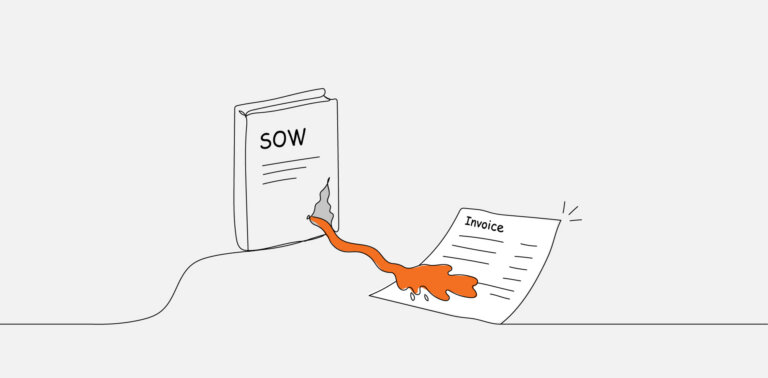
Something as direct as “if scope changes are needed, we’ll discuss impact on timeline and investment before any additional work begins” sets the tone for a partnership built on clarity rather than surprise invoices.
Your Proposal Is A Decision Tool, Not A Sales Pitch
The shift from writing proposals that showcase the agency to writing proposals that enable decisions isn’t about simplifying the work. It’s about respecting the internal gauntlet your client has to navigate after your document leaves your outbox.
Every section should answer a question a real stakeholder would ask. Every investment figure should be findable in under ten seconds. Every piece of technical scope should have a plain-language counterpart nearby for the person who skipped straight to the budget page.
The agencies that close more consistently aren’t always the ones with the sharpest strategy or the most competitive pricing. They’re the ones who make it easy for a stretched-thin VP to walk into a budget meeting and say, “I know what we’re getting, what it costs, and why it matters. Let’s approve this.”
That’s what a great proposal does. It doesn’t just sell the work—it clears the path to yes.
Frequently Asked Questions
FAQs
How Long Should A Website Proposal Actually Be?
Most effective website proposals land between five and ten pages, with a separate appendix for anyone who wants technical depth. Length alone isn’t the issue—structure is.
A tightly organized eight-page proposal that’s easy to scan will consistently outperform a 30-page document, because it respects the reader’s time and survives the forwarding chain intact.
Should A Proposal Offer Multiple Pricing Tiers?
Two or three clearly differentiated options can help, particularly when the client’s budget isn’t locked in. The key is making each tier distinct in both scope and outcome.
If the differences between Option A and Option B require a paragraph of explanation, you’ve created confusion, not choice. Each option should stand on its own as a complete, logical path forward.
How Quickly Should A Proposal Go Out After Discovery?
Five to seven business days is the sweet spot. Wait much longer, and the client’s internal momentum cools—other priorities fill the gap, urgency fades, and the stakeholders who were aligned start to drift.
A prompt turnaround also signals something important about how you operate: that you’re organized, responsive, and ready to move.
What’s The Most Effective Way To Follow Up On A Proposal?
Skip the “just checking in” email.
Instead, offer something that makes your contact’s internal job easier—a one-page summary they can forward to their leadership team, a short call to walk through the investment section, or a note addressing a question that surfaced in your last conversation.
Every touchpoint after the proposal should reduce friction, not add social pressure.