Every agency that builds for clients has a deploy story it tells with a wince. The Friday afternoon push that took down checkout twenty minutes into rush hour. The routine CSS update that ate the mobile menu on the morning of a campaign launch. The database tweak quietly orphaned half the meta titles for three weeks before anyone noticed they were gone.
Those moments almost always trace back to the same root cause. No staging environment stood between a developer’s machine and live customer traffic, because somewhere upstream—in a project kickoff or a budget conversation—a client asked why staging was a line item, and the answer that came back was either weak or surrendered to.
This article works through the conversation that should have happened then. How staging environments earn their cost, the math behind the risk they prevent, and the language that makes the case in a way clients are willing to actually accept.
What Staging Actually Prevents And What It Costs
A staging environment is a private replica of the live site that mirrors production—same code, same plugins, same database shape, same configuration—and exists exclusively for testing.
It carries no real customer traffic and runs no live transactions. Every change gets a dress rehearsal there before facing anyone who pays the client, which is what turns website uptime into a property of the process rather than a matter of luck.
The Failures Staging Catches
The catalogue of issues a properly configured pre-production environment catches before they hit users is long and unglamorous. A short list of the routine ones:
- Plugin updates that silently break the homepage on Safari
- Payment gateway changes that disable Apple Pay across iOS
- Theme deploys that nuke the mobile menu the day before a campaign launch
- CMS migrations that quietly drop eight percent of the meta titles
- Caching rules that worked locally and then crashed on the CDN edge
- Tracking-pixel rewrites that stop reporting conversions for three weeks before anyone notices
None of these is exotic, and none of them is rare. Every agency that has shipped enough work has lived through some version of each.
The Cost Asymmetry
Running a parallel pre-production stack on most agency hosting plans costs a few hundred dollars a month and adds a sync routine to the deployment workflow.
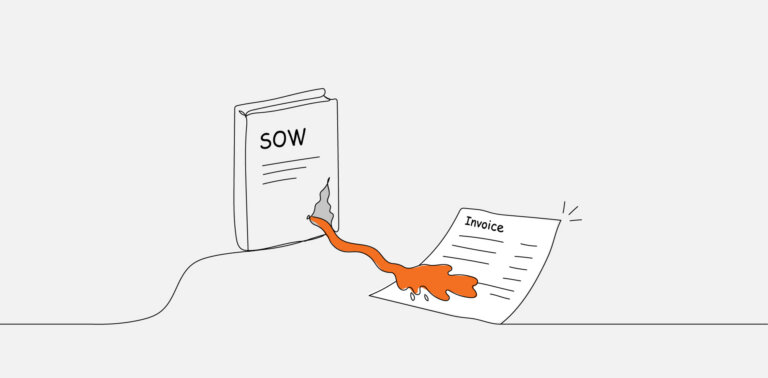
The fallout from skipping it shows up as hot-fix invoices, frantic Slack threads, and a client whose trust took twelve months to build and ten minutes to dent.
Splunk and Oxford Economics put the aggregate cost of unplanned downtime across the Global 2000 at $600 billion a year, a fifty percent rise in two years, with the average outage running $15,000 per minute.
Mid-market clients operate well below that scale, of course. Even so, the proportional damage from an afternoon of broken checkout or a botched lead-gen form usually exceeds a year of staging hosting many times over.
The Real Math Of Production-First Deployments
Risk on a production deployment compounds across four variables. The probability the deploy fails, the cost when it does, the time it takes for someone to notice, and the time it takes to put the site back together.
Every one of those variables behaves predictably worse without a pre-production environment in the deployment pipeline.
Why Each Variable Gets Worse
- The probability of failure rises because the deploy never gets a rehearsal
- The cost of failure lands harder because customers become the test population
- Detection time slows down because alerts watch for uptime, while silent regressions slip past
- Recovery time drags because the engineer is debugging in front of a live audience
Even mature teams rarely escape this risk entirely. Google’s 2024 Accelerate State of DevOps Report found that only nineteen percent of software teams qualify as elite performers. Even those teams operate at change failure rates around five percent.
The remaining eighty-one percent fail more often. Most agency teams sit in the middle of that distribution, typically running change failure rates closer to fifteen or twenty percent on production deployments without a proper staging step.
What the Delivery Research Shows
Even mature teams do not escape this, and the trend is moving the wrong way. Google’s 2025 DORA report found that AI adoption now correlates positively with delivery throughput while still correlating negatively with delivery stability. More change, shipped faster, against the same safety nets.
The report is direct about the mechanism. Without robust control systems, meaning automated testing, mature version control, and fast feedback loops, an increase in change volume produces instability.
A pre-production environment is one of those control systems, and for most agency stacks it is the cheapest one to add.
What That Looks Like On A Retainer
Run this as an illustration, not a benchmark. Take a team shipping thirty deployments a quarter and assume roughly one in seven goes wrong. That produces four or five broken deployments per client per quarter, with detection and recovery running a couple of hours each.
No one publishes a reliable agency-specific failure rate, and the shape of the math holds across any plausible one.
The client experiences something like four hours of customer-facing disruption every quarter, repeatedly traceable to the agency’s release process. The hot-fix work is then billed back to the same client, who is now paying twice for an outcome they were never informed they would be taking on.
Adding that gate to the deployment pipeline shifts where failure happens. Most failures land on a private server during business hours, in front of an audience of one engineer who can quietly fix them before they ever reach a customer’s browser.
Environment Parity And Why It Matters
A staging environment is only as useful as the production environment it actually mirrors. Surface-level resemblance offers no protection on its own.
If the replica runs a different PHP version, a different caching layer, or a different database engine, each gap creates another place where the replica passes cleanly, and production fails for reasons no one tested for.
What Real Parity Means
Real parity means matching production on the things that drive runtime behavior:
- Server stack and runtime versions
- Database schema and representative data volume
- Environment variables, secrets, and API endpoints
- Caching, queues, and CDN configuration
- DNS routing and SSL certificate handling
Anything looser than this turns staging into theatre—an environment that gives confidence without earning it. Parity starts upstream, with the development environments a build passes through before it ever reaches a replica of production.
The False Economy Of Stripped-Down Staging
The temptation, especially under client price pressure, is to economize with a stripped-down staging stack. That is how pre-production environments quietly stop being useful in the first place.
A replica that is sixty percent similar to production catches roughly sixty percent of the issues, and the other forty percent arrive as surprises while the team operates on false confidence.
Genuine parity costs more to maintain than a half-version. Skimping on it usually means paying for the discipline of staging without the benefit it was supposed to deliver.
Framing Staging As A Client Win, Not An Expense
The pushback from clients usually arrives in one of three forms:
- “Why do we need to pay for two of everything?”
- “Can’t we just push it and fix what breaks?”
- “Other agencies don’t make us do this.”
Each one is the same question wearing different clothes. What value am I getting for this line item, and why is it on my invoice?
The instinct in the moment is to answer technically, with phrases like “best practice” and “industry standard.” Those phrases sound like agency self-interest dressed up as virtue, and they tend to make the conversation worse.
The argument that holds up in a client meeting is the one translated into the client’s own vocabulary—risk, revenue, reputation, and recovery time.
Frame One: Insurance Against Outages
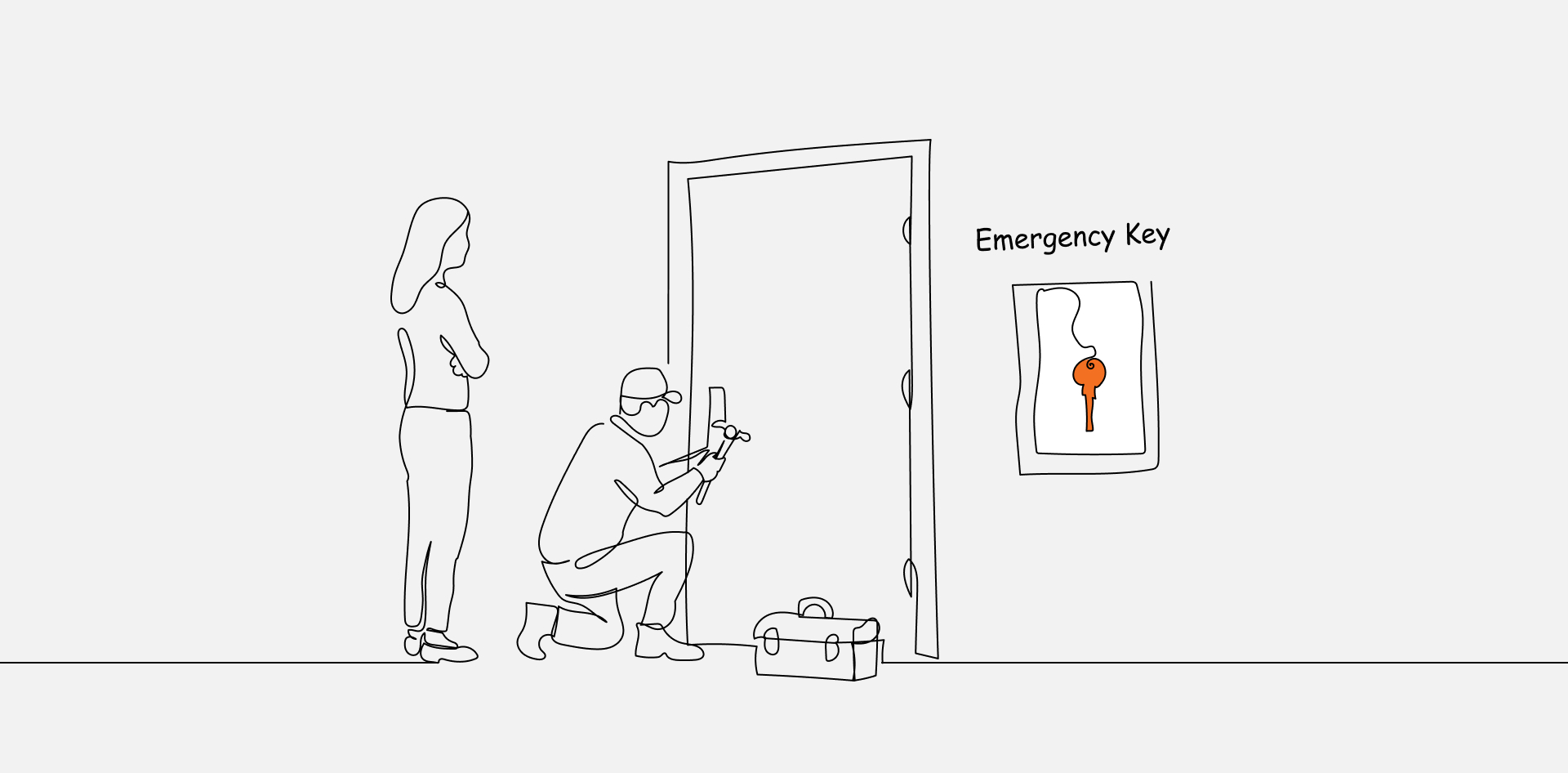
Insurance is a familiar concept. Clients understand paying a small, predictable cost to avoid a large, unpredictable one, and that is the deal a pre-production environment offers in plain terms.
Once described that way, the line item becomes a comparison that the client already knows how to evaluate. It sits in a category they already approve every other line item in.
Frame Two: Where Testing Belongs
Staging is the place where new code gets tested. The practical alternative is testing in front of paying customers.
Most clients have never had production-first deployments named for what they functionally are. The moment that framing lands, the staging conversation usually ends. Few buyers want to defend the position of running experiments on the people who pay them, and fewer still want to hear that a problem surfaced after the first draft rather than before it.
Frame Three: Predictable Cost vs Unpredictable Cost
Hotfixes outside business hours, weekend rollbacks, and emergency engineering support all carry higher costs than scheduled staging work. So does the goodwill required to recover from a public outage.
Clients who connect those dots quickly tend to view the staging line item as a predictable expense, replacing the unpredictable expense. That is a far more comfortable position for any buyer to underwrite.
The Release Process That Uses Staging Right
A staging environment without a release process around it tends to become a parking lot for half-finished work that no one trusts. The five-step release process below is the minimum viable version that uses staging to earn its cost.
Step 1: Build And Test On Development
Developers work on local or shared development environments where code is reviewed, and automated tests run. The obvious issues get caught here, before anything is promoted further. Nothing reaches staging that has not cleared this gate.
Step 2: Promote A Stable Build To Staging
Only review-passed, stable code gets promoted to staging, where the build sits as a release candidate. Anything in it should be one approval away from going live. Treating it that way is what protects its credibility with the client and the team.
Step 3: Run A Structured Pre-Launch Check
This is the QA pass: cross-browser checks, mobile behavior, accessibility, key user journeys, integrations, analytics events, and performance under realistic load. The checklist stays the same every release, so the team builds rhythm, and the client knows what to expect from the process.
Step 4: Client Sign-Off In Staging
The client reviews the change in staging and signs off in writing before anything goes live. The value of the process becomes tangible to the client at this stage. They see what is coming before any customer does, and they hold the final approval gate.
Step 5: Deploy To Production With A Rollback Plan
Production deployments happen with a documented rollback path. How to revert, who calls the rollback, and what the recovery time looks like.
Even with staging in place, occasional production-only failures still happen. The rollback plan is what turns those moments from outages into manageable inconveniences.
The Tech Debt Connection
McKinsey’s technical debt research belongs in this conversation. It puts technical debt at roughly forty percent of IT balance sheets in large enterprises.
Skipping staging is one of the most reliable ways to manufacture exactly that kind of debt. Every untested emergency fix becomes principal that the engagement keeps paying interest on for as long as it lasts.
Where The Conversation Has To Change
Most client objections to a pre-production line item are downstream of how the conversation got framed in the first place. When the framing centers on internal workflow, the line item gets read as agency overhead, and any client looking at a budget will reach for the negotiation pen.
The framing has to land on the client’s side of the equation. The pitch becomes about the things they actually care about—revenue continuity, brand experience, and how quickly the site comes back when something breaks.
Agencies that have stopped having this argument tend to share a common pattern. Staging is built into how they describe the engagement from the very first proposal, presented alongside the release process and the rollback plan as a single integrated approach to delivery. By the time anyone reads the invoice, the staging environment is already a known quantity.
For any agency still negotiating staging on a project-by-project basis, the deeper question is whether the underlying release process is solid enough to put in front of a buyer with confidence.
Maturity in the process is what turns the staging conversation into a credential, and it tends to compound over time. Every client who experiences the process working becomes a reference for the next client who asks. It also depends on agency hosting plans that support a parallel environment in the first place.
Frequently Asked Questions
FAQs
Does A Staging Environment Really Double The Hosting Bill?
In raw infrastructure terms, adding staging adds cost, and the increase usually represents a small fraction of the monthly hosting line. The more useful comparison sets that recurring fraction against the cost of one bad production incident, which routinely runs higher in agency hours, lost client revenue, and reputational damage than a full year of staging hosting.
Can Feature Flags Replace A Staging Environment?
Feature flags solve a different category of problem. They allow code to be deployed conditionally to specific users or segments in production, which works well for gradual rollouts and A/B testing.
Environment parity, infrastructure-level testing, and a private space for client review remain outside what flags actually do. Most mature workflows use both as complementary tools.
How Often Should Staging Be Refreshed From Production?
For most agency stacks, staging should pull a fresh database snapshot at least weekly, with on-demand syncs scheduled before any major release.
The longer staging drifts from production—stale content, outdated user data, missing recent integrations—the less reliably it predicts how production will behave under the next deploy.
What If The Client Already Paid For A Build With No Staging?
The cleanest path is to close the gap on the next engagement. Fighting for it mid-project usually ends in a compromise nobody is happy with.
Folding staging into the next phase of work, the maintenance retainer, or the post-launch support agreement, gives the conversation a natural opening, while introducing it inside an already-scoped budget tends to read as a price increase.
Are There Cases Where The Release Process Should Be Outsourced?
For agencies stretched thin on senior engineering capacity, partnering with a white-label development team can absorb the staging discipline—parity maintenance, deployment workflow, rollback handling, the full release process—without adding internal headcount.
The client gets the benefit of a mature deployment process under the agency’s own brand, and the agency keeps focus on strategy and the client relationship while execution runs underneath.